
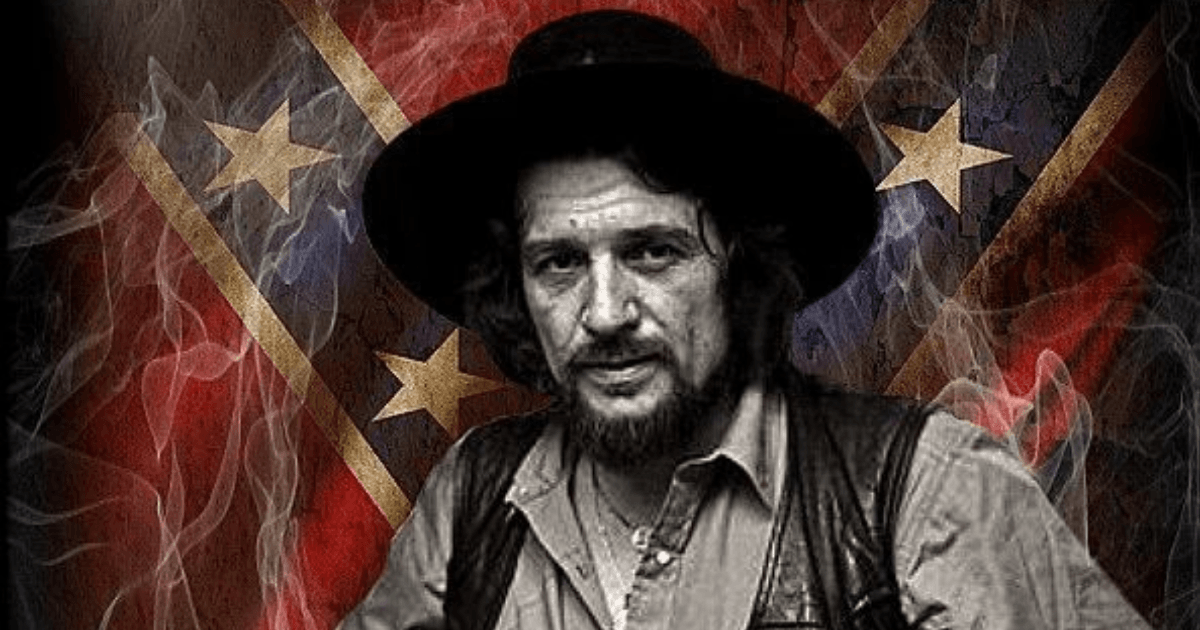
About the song
“America” is one of the most reflective and thought-provoking songs in Waylon Jennings’ catalog, offering a deeply personal meditation on national identity, change, and the emotional contradictions of patriotism. The song was released in 1984 as part of the album Waylon’s Greatest Hits, Vol. 2, and it firmly belongs to the country music genre, with strong elements of outlaw country and country folk. Rather than celebrating the nation through slogans or grand imagery, “America” approaches its subject with honesty, concern, and lived experience, making it one of Jennings’ most mature and introspective recordings.
At its core, “America” is not a song of blind praise, nor is it a protest anthem in the traditional sense. Instead, it is a conversation—one that reflects pride, disappointment, hope, and uncertainty all at once. Waylon Jennings sings as someone who loves his country deeply but is troubled by the direction it seems to be taking. This balance between loyalty and criticism is central to the song’s emotional weight. Jennings does not position himself as an outsider looking in, but as someone firmly rooted within the American experience, watching it evolve with mixed feelings.
Lyrically, “America” is grounded in observation rather than accusation. The song reflects on social change, shifting values, and the growing sense of division that many people felt during the early 1980s. Jennings questions whether the ideals people once believed in are still intact, and whether progress has come at the cost of unity and meaning. The tone is not angry, but weary and contemplative, suggesting a man who has lived long enough to remember a different version of the country and is unsure how to reconcile that memory with the present.
Waylon Jennings’ vocal performance plays a crucial role in shaping the song’s impact. His voice is steady, gravelly, and unmistakably seasoned, carrying the authority of experience rather than ideology. He does not raise his voice to persuade; instead, he speaks through melody with quiet conviction. This delivery makes the song feel personal, as if Jennings is thinking out loud rather than making a statement for an audience. The emotional strength lies in restraint, allowing listeners to interpret the message through their own perspectives.
Musically, “America” is built on a simple, grounded arrangement that reflects its serious subject matter. The instrumentation is rooted in traditional country, with acoustic guitar, subtle rhythm, and understated backing elements that keep the focus on the lyrics. There are no dramatic flourishes or anthemic crescendos. The song moves at a measured pace, reinforcing the sense of reflection and emotional gravity. This musical simplicity gives the words room to resonate and prevents the message from feeling forced or overly polished.
Within Waylon Jennings’ career, “America” represents a natural extension of his artistic philosophy. As a leading figure in the outlaw country movement, Jennings was known for resisting commercial formulas and prioritizing honesty over mass appeal. This song reflects that same independence. Rather than aligning with popular patriotic narratives, Jennings offers a nuanced portrayal of national identity—one that acknowledges flaws without abandoning love. It is a song that trusts the listener to think, rather than telling them what to believe.
The timing of the song’s release in 1984 is significant. This was a period marked by political tension, cultural shifts, and renewed conversations about national pride and direction. Many artists responded with either overt celebration or direct protest. Jennings chose a different path, offering reflection instead of rhetoric. This approach gave the song lasting relevance, as its questions are not tied to a single moment in history but continue to echo across generations.
“America” also stands out because of its emotional universality. While rooted in a specific national context, the song speaks to a broader human experience: the struggle to love something while acknowledging its imperfections. Whether applied to a country, a community, or even a family, the song’s emotional core remains relatable. It captures the tension between memory and reality, between ideals and outcomes, and between hope and disappointment.
Over time, the song has been appreciated for its honesty and courage. It does not attempt to offer solutions or moral conclusions. Instead, it presents a snapshot of emotional truth, trusting that listeners will find their own meaning within it. This open-ended quality is one of the song’s greatest strengths. It invites reflection rather than reaction, making it a song that grows deeper with repeated listening.
Ultimately, “America” by Waylon Jennings, released in 1984 within the country and outlaw country tradition, stands as a powerful example of music used as reflection rather than persuasion. Through its restrained arrangement, thoughtful lyrics, and Jennings’ unmistakably sincere vocal delivery, the song captures the complexity of loving a country while questioning its path. It is not a song of certainty, but of conscience—a quiet, enduring reminder that true patriotism often lives in honest self-examination rather than unquestioned praise.