
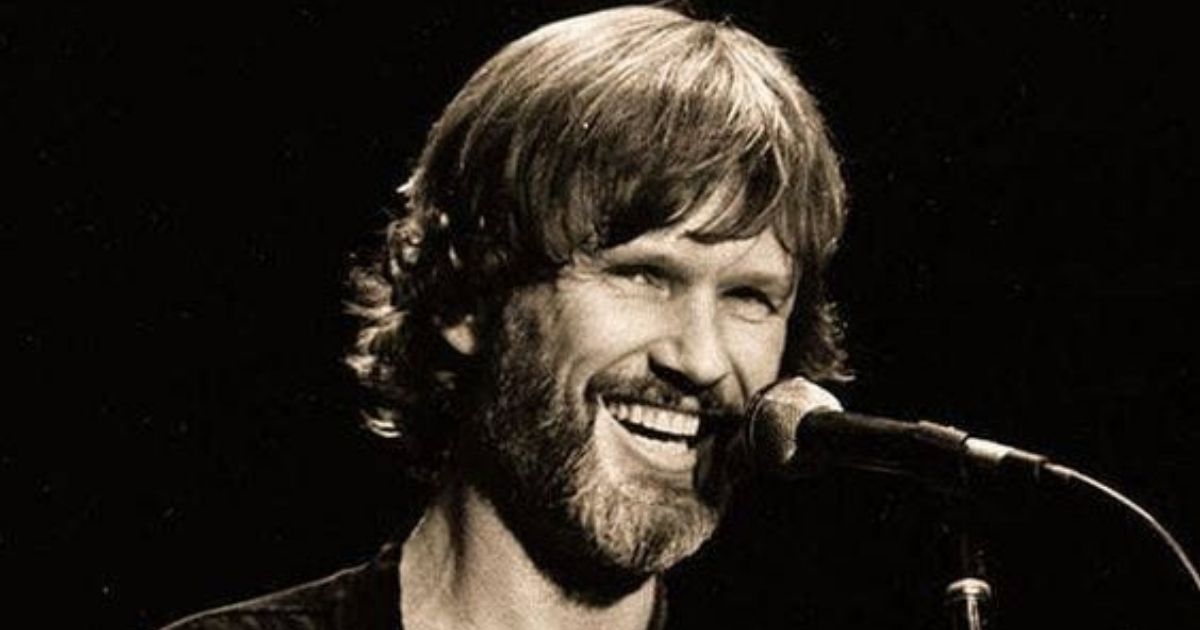
About the song
“The Promise” is one of the most emotionally raw and introspective songs written and performed by Kris Kristofferson, the legendary American singer-songwriter, poet, and actor known for his poignant lyricism and rugged authenticity. Released on his 1986 album Repossessed, “The Promise” stands as a deeply personal reflection on love, regret, and the passing of time. It is a song that distills Kristofferson’s storytelling mastery — blending poetic honesty with vulnerability and moral reckoning.
Kris Kristofferson has always been known for his ability to expose the human condition with a few well-chosen words. In “The Promise,” he strips away the bravado and irony often found in his earlier works to reveal a man confronting the consequences of broken commitments and emotional failure. The song is quiet, almost confessional, and it feels like an intimate letter written in solitude. Its simple melody and restrained arrangement serve to highlight the gravity of its words — every syllable rings with lived experience.
Background and Context
By the mid-1980s, Kristofferson had already established himself as one of the defining voices in American songwriting. His career, which began in the late 1960s, had been marked by masterpieces like “Help Me Make It Through the Night,” “Sunday Mornin’ Comin’ Down,” and “Me and Bobby McGee.” Yet “The Promise” arrived during a period of personal and creative introspection.
At the time, Kristofferson was emerging from the turbulent years following his high-profile marriage and subsequent divorce from singer Rita Coolidge, as well as wrestling with the challenges of fame, aging, and disillusionment. “Repossessed” — the album that features “The Promise” — was a return to form, showcasing his renewed commitment to writing songs with spiritual and emotional integrity. The title itself hinted at reclaiming lost ground, both artistically and personally. Within that context, “The Promise” serves as the emotional heart of the record — a quiet meditation on loss, forgiveness, and enduring affection.
Lyrics and Meaning
Lyrically, “The Promise” unfolds like a letter from a man looking back at a love he couldn’t sustain. The opening lines immediately set the tone of melancholy and reflection:
“You gave me back my soul again, by showin’ me the laughter and the wonder in your eyes.”
From the start, the song feels deeply grateful, even reverent. The narrator acknowledges that this love once renewed his spirit, reminding him of life’s beauty and joy. Yet beneath this gratitude lies sorrow — the acknowledgment that something precious has been lost.
As the song progresses, Kristofferson confronts his own failures with devastating simplicity:
“You gave me back the fire that was gone, and now it’s just a memory of the promise that I made.”
Here, “the promise” becomes both literal and symbolic — the commitment of love, fidelity, and emotional truth that he could not keep. The phrase “just a memory” captures the tragic transformation of something sacred into something unreachable. Kristofferson’s choice of words — direct yet poetic — gives the song its haunting emotional clarity. There are no metaphors to hide behind, only the raw truth of remorse.
The refrain carries the weight of emotional reckoning:
“I never meant to hurt you, but I know I did.”
This line distills the essence of human imperfection — the way love and pain often coexist. Kristofferson doesn’t seek forgiveness or redemption; he simply acknowledges the hurt and accepts responsibility. It’s this humility that gives the song its moral power. Rather than idealizing love, “The Promise” confronts its fragility with honesty and grace.
Musical Arrangement and Vocal Delivery
Musically, “The Promise” is sparse and understated — primarily driven by acoustic guitar and gentle piano chords, allowing the lyrics to remain the focal point. The tempo is slow, the rhythm almost like a heartbeat, underscoring the song’s intimacy. The production avoids embellishment, favoring a minimalist style that mirrors the emotional vulnerability of the lyrics.
Kristofferson’s vocal performance is remarkable in its restraint. His voice, gravelly and weathered by age and experience, carries an authenticity that few singers can match. He doesn’t reach for technical perfection — instead, he delivers each line as if it were a confession. There’s a trembling sincerity in his phrasing, a sense that he’s not merely performing but reliving the emotions behind every word. This gives the song an almost sacred quality, as if the listener is overhearing a private moment of truth.
Themes and Emotional Resonance
At its core, “The Promise” explores redemption, regret, and the enduring power of love, even when that love has been lost. It’s a meditation on what it means to fail someone you care for deeply — and to live with that knowledge. Unlike many love songs that seek reconciliation or closure, Kristofferson’s narrative remains unresolved. The “promise” is broken, and the wound cannot be undone. Yet the act of remembering — of singing about it — becomes a form of redemption in itself.
Another key theme is spiritual awakening through pain. The song’s tone suggests that even heartbreak carries a kind of grace. Through sorrow, the narrator gains a clearer understanding of himself and the human condition. This fusion of romantic and spiritual insight is a hallmark of Kristofferson’s songwriting. His songs often blur the line between love and faith, sin and salvation, failure and forgiveness — and “The Promise” may be one of his most profound examples of this duality.
Reception and Legacy
While “The Promise” was not released as a commercial single, it has earned a quiet reverence among Kristofferson’s fans and critics. Many consider it one of his most underrated masterpieces, a song that captures the essence of his artistry — the unflinching honesty, the poetic minimalism, and the deep moral introspection.
In live performances, “The Promise” often draws hushed attention. Listeners recognize that they’re witnessing something deeply personal. It’s not a song designed for radio or chart success; it’s meant for those willing to sit still and listen — to confront their own memories of love, loss, and broken vows.
Conclusion
Kris Kristofferson’s “The Promise” is a haunting testament to the enduring power of honesty in music. Stripped of pretense, it reveals the songwriter at his most vulnerable — a man confronting his past, acknowledging his flaws, and finding dignity in regret. Through its simplicity, the song achieves profound emotional depth, reminding us that love, even when lost, leaves an indelible mark on the soul.
More than just a ballad of heartbreak, “The Promise” is a meditation on human frailty and moral courage — the courage to admit failure and the grace to remember love with gratitude instead of bitterness. Decades after its release, it remains one of Kris Kristofferson’s most touching and timeless works, an intimate portrait of a man who understands that sometimes the most powerful promises are the ones we can’t keep — but never forget.