
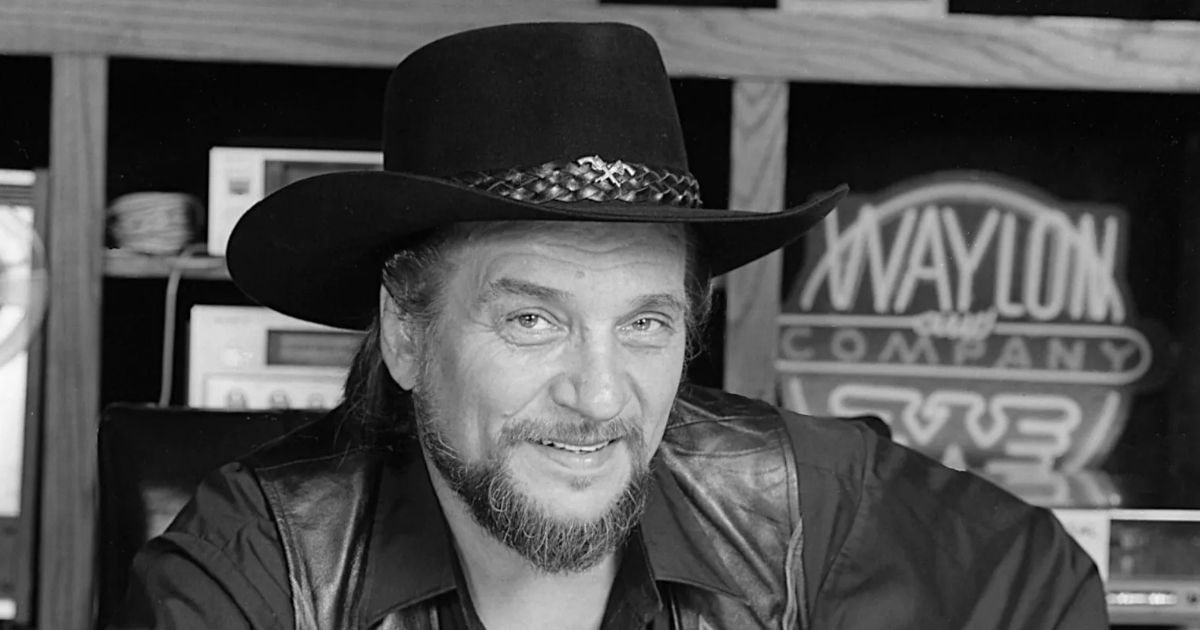
About the song
“I Ain’t Living Long Like This” is one of the defining songs of Waylon Jennings’ outlaw era, a fiercely rebellious anthem that encapsulates the spirit of independence, defiance, and grit that came to define 1970s country music. Released in 1979 as a single from Jennings’ album What Goes Around Comes Around, the song became a No. 1 hit on the Billboard Hot Country Singles chart and remains one of his most iconic performances.
Written by Rodney Crowell, “I Ain’t Living Long Like This” was originally recorded by Gary Stewart in 1977 and later by Crowell himself. But it was Waylon Jennings’ powerful, swaggering version that transformed the song into a country outlaw classic, cementing his reputation as one of the genre’s boldest and most authentic voices.
The song’s gritty realism, coupled with its relentless rhythm and raw vocal delivery, made it not only a hit but a statement — a declaration of resistance against conformity, corruption, and the dangers of a reckless life.
Background and Context
By the late 1970s, Waylon Jennings was already a towering figure in country music. As one of the leaders of the outlaw country movement, alongside Willie Nelson, Kris Kristofferson, and Johnny Cash, Jennings had spent much of the decade fighting against the constraints of the Nashville music establishment.
He demanded artistic control over his recordings, choosing his own songs, musicians, and production style — a radical move at a time when most Nashville artists were tightly controlled by producers and record labels. Jennings’ defiance resulted in a new sound — raw, gritty, and unapologetically real — blending country with rock rhythms and bluesy undertones.
When he recorded “I Ain’t Living Long Like This” in 1979, the song fit perfectly with his image and musical philosophy. It captured the restless, rebellious energy of a man who had lived hard, fought addiction, and refused to be tamed by fame or expectation.
Jennings’ version became one of the standout tracks of his late-’70s career and remains a testament to his outlaw persona — not just as an image, but as a way of life.
Lyrical Themes and Storytelling
At its core, “I Ain’t Living Long Like This” is a tale of survival — a narrative filled with crime, danger, and defiance. The lyrics follow the perspective of a man who’s been through the rough edges of life: jail time, bad deals, betrayals, and constant brushes with the law. Yet through it all, he refuses to back down or surrender.
The opening verse sets the tone immediately:
“I live with a pistol, I wear a gun belt,
I’ve been shot at, I’ve been shot.”
From the very first lines, the song immerses the listener in a world of chaos and rebellion — a world where danger is constant, and living fast is the only way to stay ahead.
The chorus delivers the song’s unforgettable hook:
“I ain’t living long like this,
Can’t live at all like this, can I, baby?”
This repeated refrain is both a confession and a challenge — a recognition that the outlaw life is unsustainable, yet an acknowledgment that it’s the only life the narrator knows. The duality of pride and desperation gives the song its emotional complexity.
The verses unfold like a series of vivid vignettes — a jailhouse escape, a dangerous romance, a cycle of crime and regret — all told with the swagger of someone who’s lived through every line.
One of the song’s most memorable scenes describes a prison break:
“They caught us at the station,
They put us in a cell,
But I broke out of jail with a friend of mine,
And left a sack of mail.”
It’s cinematic, almost mythic — but beneath the bravado lies a subtle note of exhaustion. The outlaw knows his days are numbered. He’s aware that this reckless life can’t go on forever.
That tension — between pride and self-destruction — gives the song its emotional depth. It’s not a glorification of rebellion; it’s a confession of consequence.
Musical Style and Production
Musically, “I Ain’t Living Long Like This” is a perfect fusion of country, rock, and blues — the signature sound of Waylon Jennings’ outlaw era. The track opens with a driving bass line and electric guitar riff, instantly setting a tone of urgency and rebellion. The rhythm is relentless, almost like a chase scene, propelling the song forward with unstoppable momentum.
Jennings’ deep, rugged voice dominates the mix — rough yet melodic, full of character and conviction. He doesn’t merely sing the lyrics; he lives them. Each line feels like it’s coming from personal experience, reflecting his own struggles with addiction, the law, and the pressures of fame.
The production, handled by Jennings himself with Chips Moman, reflects the stripped-down, raw energy of his outlaw sound. There’s a live, spontaneous quality to the recording — guitars snarling, drums pounding, and Jennings’ voice cutting through like gravel and whiskey.
Unlike many country hits of the era, which leaned heavily on polished string sections and smooth harmonies, “I Ain’t Living Long Like This” embraces imperfection — and that’s exactly what makes it powerful. It feels authentic, dangerous, and alive.
Cultural Impact and Legacy
When released, the song quickly became one of Waylon Jennings’ signature hits. It topped the Billboard Hot Country Songs chart in 1979, and its success reaffirmed Jennings’ position as one of country music’s most influential and uncompromising figures.
More than just a commercial triumph, the song became an anthem of rebellion for countless fans who identified with its defiant spirit. It spoke to a generation tired of conformity — people who admired Jennings’ refusal to bow to authority or tradition.
Over the years, “I Ain’t Living Long Like This” has been covered by numerous artists, including Emmylou Harris, Chris Janson, Randy Moore, and even Rascal Flatts, but none have captured the raw, unapologetic energy of Jennings’ version.
The song has since become a staple of the outlaw country legacy, standing alongside classics like “Mammas Don’t Let Your Babies Grow Up to Be Cowboys” and “Are You Sure Hank Done It This Way.”
It also serves as a kind of personal anthem for Jennings himself — reflecting both his turbulent past and his refusal to compromise his values, even when it came at a cost.
Conclusion
“I Ain’t Living Long Like This” is more than a song — it’s a manifesto of the outlaw spirit. Through its raw energy, vivid storytelling, and unflinching honesty, it captures the essence of Waylon Jennings’ artistry and philosophy.
It’s a song about survival in a hard world, about living on one’s own terms even when those terms are self-destructive. Jennings doesn’t glamorize the outlaw life; he reveals its truth — the danger, the thrill, and the inevitability of its end.
Decades after its release, the song still resonates because its message is timeless: freedom has a price, and every rebel eventually faces the cost. But as Jennings made clear, for some, that price is worth paying.