
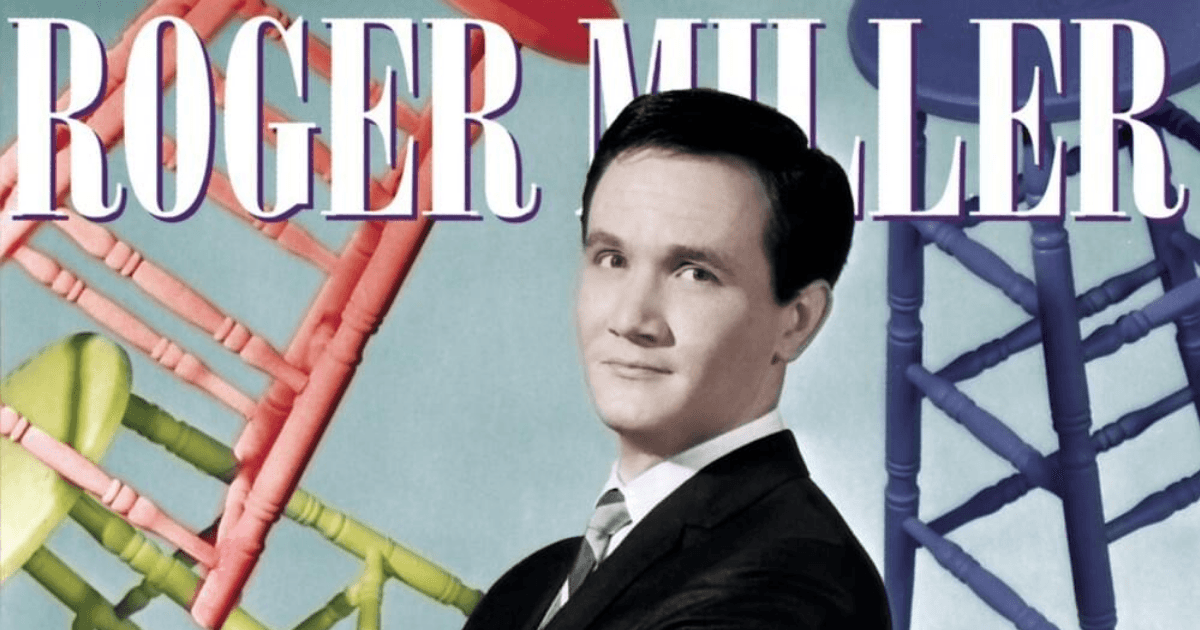
About the song
Roger Miller’s “Dang Me”, released in 1964, is one of the most iconic and innovative songs in the history of country music — a witty, rhythmically inventive, and delightfully irreverent tune that helped redefine what country songwriting could be. Written and performed by Miller himself, the song became his first major hit, reaching No. 1 on the Billboard Hot Country Singles chart and crossing over to the pop charts, where it climbed into the Top 10. It later earned him a Grammy Award for Best Country & Western Song and set the stage for his reputation as one of Nashville’s most original and clever musical minds.
At first glance, “Dang Me” seems like a simple novelty song — a light, funny ditty about a man poking fun at his own foolishness. But beneath its playful surface lies an ingenious combination of wordplay, rhythm, and self-deprecating humor that captures Roger Miller’s unique style. The song opens with the now-famous line, “Well, dang me, dang me / They oughta take a rope and hang me / High from the highest tree / Woman, would you weep for me?” — an absurdly comic expression of guilt and regret, wrapped in a jaunty melody that makes it impossible not to smile. With those first lines, Miller introduced listeners to his signature blend of humor and heart: a kind of country wit that was as sharp as it was kind-hearted.
Musically, “Dang Me” was revolutionary for its time. Lasting just under two minutes, the song is fast-paced and rhythmically unconventional, blending elements of jazz, pop, and country into something entirely fresh. Its bouncy, syncopated beat, minimalist instrumentation, and scat-like vocal delivery gave it an upbeat and modern feel that stood out from the more traditional country ballads of the early 1960s. Miller’s smooth, mischievous vocal phrasing — punctuated by his spontaneous chuckles and rhythmic vocal riffs — created an intimate, conversational tone, as though he were joking with the listener over a cup of coffee. This spontaneity became one of his trademarks, influencing later country comedians and songwriters like Ray Stevens and Jerry Reed.
The lyrics of “Dang Me” showcase Miller’s remarkable gift for compressing character, comedy, and melody into just a few short verses. The song tells the story of a lazy, irresponsible man who neglects his duties, drinks too much, and causes trouble for his family — yet remains oddly charming. Lines like “Roses are red and violets are purple / Sugar is sweet and so is maple surple” playfully twist familiar clichés into something entirely new. Miller’s wordplay was not just funny — it was inventive and rhythmically sophisticated, proof that he approached songwriting as both a musician and a poet. His humor, though self-mocking, never feels bitter or cynical. Instead, it reflects a light-hearted acceptance of human imperfection.
What made “Dang Me” even more remarkable was its timing. When the song was released in 1964, country music was undergoing a shift. The polished “Nashville Sound” was dominating the airwaves, characterized by smooth vocals, string sections, and a focus on romance and heartbreak. Miller’s song, with its simple production and quirky humor, felt like a breath of fresh air. It reminded audiences that country music could still be fun, spontaneous, and deeply personal. The song’s success proved that humor and intelligence had a place on the charts — and it paved the way for the “outlaw” and “alternative country” movements that would follow in the next decade.
Roger Miller’s performance of “Dang Me” was as crucial to its success as the lyrics themselves. A born entertainer, Miller infused every line with personality — a mixture of charm, self-awareness, and goofiness that audiences found irresistible. His delivery was effortless, his timing impeccable. When he performed live, he often embellished the song with spontaneous jokes and improvised phrases, making every rendition unique. This sense of play made him not just a singer but a storyteller and comedian in equal measure.
Beyond its humor, “Dang Me” reveals deeper themes of humility and self-examination. While the song’s narrator jokes about being hanged for his misdeeds, there’s an underlying recognition of human weakness. Miller’s humor never mocked others — it turned inward. He laughed at himself, and by doing so, invited listeners to laugh at their own flaws. In this way, “Dang Me” became more than a novelty hit; it was a reflection of a uniquely American spirit — the ability to face life’s troubles with wit, irony, and a smile.
The song’s impact on popular culture was immense. “Dang Me” not only made Roger Miller a household name but also ushered in a series of hits that combined humor, wisdom, and wordplay — including “Chug-a-Lug,” “King of the Road,” and “England Swings.” Together, these songs helped redefine what country music could be, showing that it didn’t always have to take itself so seriously to convey truth and emotion.
In the years since its release, “Dang Me” has been celebrated as a classic of American songwriting — a perfect example of how simplicity, humor, and creativity can produce something timeless. Its cheerful tune and mischievous lyrics continue to resonate with audiences, proving that even in a world of complex emotions and serious problems, a little laughter and honesty can go a long way.
In conclusion, Roger Miller’s “Dang Me” is more than just a funny song — it is a landmark in the evolution of country music. Through its witty lyrics, innovative rhythm, and effortless charm, it introduced a new kind of humor and sophistication into the genre. The song remains a shining example of Miller’s genius: his ability to turn everyday foolishness into art, to make people laugh while also making them think. As long as listeners appreciate clever songwriting and good-natured humor, “Dang Me” will continue to hang high among the greatest songs in country music history.