
About the song
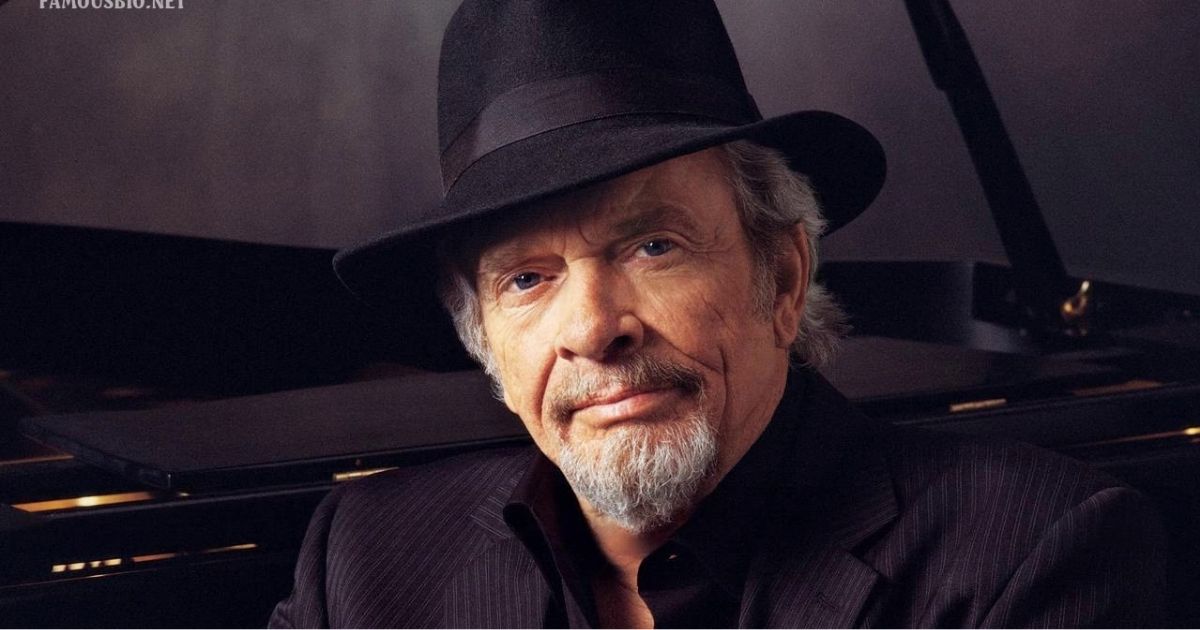
“Misery and Gin” is one of the most haunting and emotionally charged songs ever recorded by Merle Haggard, the legendary voice of the working man and the restless soul of country music. Released in 1980, the song captures the deep loneliness and regret that defined much of Haggard’s finest work — a portrait of a man who turns to alcohol not for joy, but for the painful company it provides.
Written by Snuff Garrett and John Durrill, “Misery and Gin” was recorded for the soundtrack of the Clint Eastwood film Bronco Billy, and later included on Haggard’s album Back to the Barrooms (1980). While it was written by others, the song feels intensely personal when delivered by Haggard; his performance transforms the words into something that seems pulled from his own life.
With its slow tempo, mournful steel guitar, and world-weary vocal, “Misery and Gin” stands as one of Haggard’s most affecting ballads — a masterful exploration of heartbreak, guilt, and the deceptive comfort of alcohol.
Background and Context
By the time Merle Haggard recorded “Misery and Gin,” he was already a towering figure in American music. The 1970s had seen him produce a long string of hits — “If We Make It Through December,” “The Roots of My Raising,” “I Think I’ll Just Stay Here and Drink,” among many others — that showcased his deep understanding of working-class struggles, love, and loneliness.
But as the new decade began, Haggard’s life and career were changing. His personal relationships had grown complicated; he was divorced multiple times, and fame had brought both success and isolation. The early 1980s found him confronting themes of aging, regret, and emotional weariness — all of which surface powerfully in “Misery and Gin.”
When Back to the Barrooms was released, it was widely regarded as a return to form, featuring classic honky-tonk themes and some of the most personal performances of Haggard’s later career. The record, full of drinking songs and introspective ballads, could almost be read as a confessional, with “Misery and Gin” as its emotional centerpiece.
Lyrical Themes and Interpretation
At its heart, “Misery and Gin” is a meditation on the loneliness that lingers after heartbreak, and how alcohol, rather than healing that pain, only amplifies it.
The song begins with an image that could be pulled straight from a late-night honky-tonk:
Memories and drinks don’t mix too well,
Jukebox records don’t play those wedding bells.
In just two lines, the tone is set — the narrator is sitting in a bar, surrounded by reminders of lost love and happier times. The jukebox, often a source of comfort in country music, becomes a cruel companion here, playing songs that mock his loneliness.
The chorus delivers the devastating truth:
Looking back on the memories still makes me cry,
What’s left of my heart will never say goodbye.
The word “gin” in the title isn’t just a drink — it’s a metaphor for the numbing cycle of regret and denial. The man drinks to forget, but alcohol only heightens his sense of despair. Haggard sings the lines not with self-pity, but with quiet resignation — as though he knows he’s trapped in a loop of his own making.
The pairing of “misery” and “gin” in the title captures the essence of Haggard’s worldview: pain and comfort, loneliness and escape, forever intertwined. It’s not a drinking song in the celebratory sense; rather, it’s an acknowledgment of the way broken hearts turn to the bottle for solace, only to find the pain still waiting in the morning light.
Musical Composition and Performance
Musically, “Misery and Gin” exemplifies the best of Haggard’s Bakersfield sound refined for the 1980s — a perfect blend of traditional country instrumentation and emotional subtlety. The arrangement is slow and spacious, allowing the emotion in every note to breathe.
The steel guitar weeps softly in the background, while piano and fiddle underscore the melancholy tone. The rhythm is steady but subdued, evoking the feeling of a quiet barroom late at night, long after the laughter has faded.
At the center of it all is Haggard’s voice — warm, rich, and weary. His phrasing is deliberate, his tone almost conversational, yet heavy with meaning. When he sings lines like “Memories and drinks don’t mix too well,” it feels as though he’s lived every word.
Haggard’s vocal delivery avoids dramatization; instead, it’s understated, honest, and heartbreakingly human. That restraint is what gives the song its emotional power — it doesn’t need to shout its sorrow because the pain is already there, lingering beneath the surface.
Emotional and Cultural Resonance
“Misery and Gin” connects deeply because it speaks to a universal truth: that heartbreak doesn’t always lead to healing — sometimes it leads to a quiet, lifelong ache.
Country music has always celebrated its drinking songs, but this one stands apart because it reveals the sadness behind the bottle. Rather than romanticizing alcohol, Haggard exposes it as a temporary escape from pain — one that ultimately deepens the loneliness it’s meant to cure.
Listeners identified with that honesty. Many of Haggard’s fans came from working-class backgrounds, where bars and jukeboxes were places of both refuge and regret. “Misery and Gin” captured that atmosphere perfectly — the mix of laughter, heartbreak, and whiskey-fueled reflection that defines so much of country life.
The song’s inclusion in Bronco Billy — a film about an aging cowboy and dreamer trying to hold onto a fading past — further emphasized the song’s themes of loss and disillusionment. Both the film and the song deal with men out of time, clinging to the ideals and loves they’ve lost, using alcohol as both a friend and an enemy.
Legacy and Impact
Over four decades later, “Misery and Gin” remains one of Merle Haggard’s most respected recordings — a staple in discussions of his artistry and one of the defining ballads of the 1980s.
Critics have often called it one of the greatest barroom songs ever written, precisely because it strips away the bravado usually associated with drinking and exposes the loneliness underneath.
Many artists have covered the song, but none have matched Haggard’s quiet intensity. His version remains definitive because it’s more than just a performance — it’s a confession.
“Misery and Gin” stands as a perfect example of what made Merle Haggard one of the finest interpreters of emotion in country music. With just a few words and a mournful melody, he could reveal the heartbreak of an entire life.
Conclusion
“Misery and Gin” is not simply a song about drinking — it’s a masterpiece of emotional storytelling, a portrait of sorrow, memory, and the search for comfort in all the wrong places.
Through its poetic lyrics, mournful melody, and Haggard’s soulful delivery, it captures a truth that resonates across generations: you can drown your memories, but you can’t escape them.
With every aching note, Merle Haggard reminds us why he remains one of country music’s greatest voices — not just because of his talent, but because of his ability to make pain sound beautiful, and loneliness sound deeply human.