
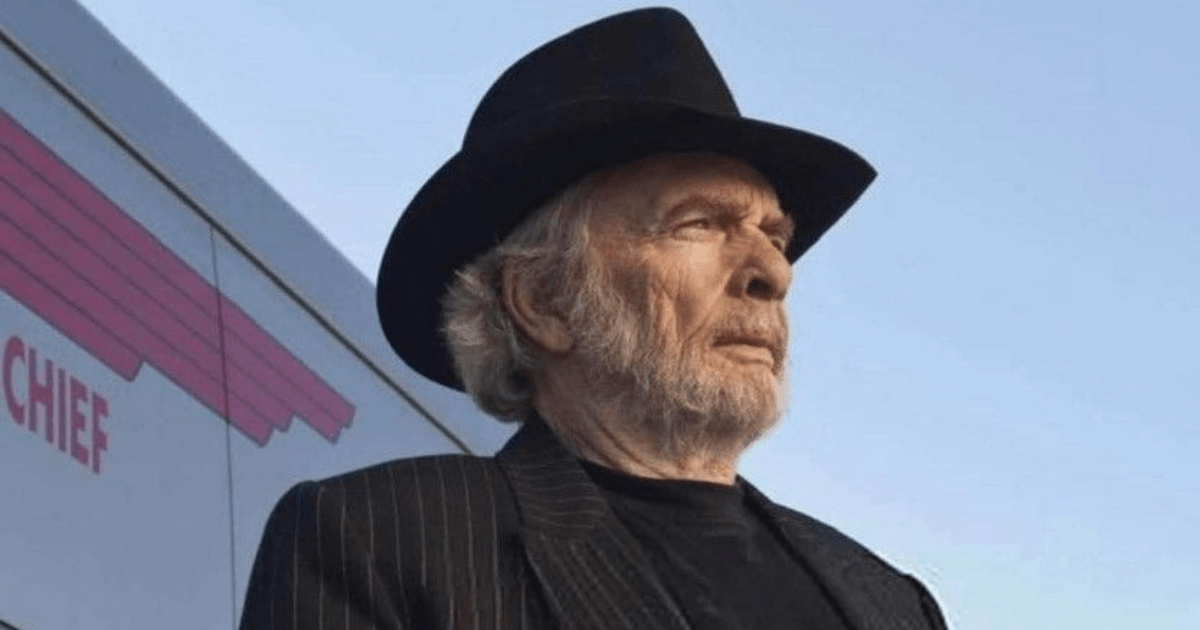
About the song
“Long Black Limousine,” recorded by Merle Haggard and released in 1967 on the album Branded Man, is one of the most haunting and emotionally charged story-songs in Haggard’s catalog. Though the song itself was written earlier by Vern Stovall and Bobby George and recorded by several artists, Haggard’s interpretation remains one of the most gripping. Sung with his unmistakable baritone and backed by the raw, guitar-forward Bakersfield sound, Haggard’s version captures the tragic core of the story with a realism that feels almost cinematic. As with many tracks from this era of his career, “Long Black Limousine” solidified Haggard as one of the greatest storytellers in country music.
Musically, the song belongs to the traditional country and Bakersfield country genres—a style defined by twangy Telecaster guitars, steady rhythms, and expressive steel-guitar flourishes. This stripped-down, emotionally direct sound stands in contrast to the polished, string-heavy Nashville production of the same era. In “Long Black Limousine,” the instrumentation is intentionally understated, leaving ample space for the narrative to unfold. Haggard’s vocal performance takes center stage, delivering a sense of somber reflection that makes the tragic storyline even more powerful.
At its core, “Long Black Limousine” is a story about ambition, regret, and the cruel irony of fate. The lyrics depict a young woman who leaves her humble roots behind, driven by dreams of fame and fortune in the big city. She promises to return home one day in a “big fine car,” imagining success and admiration. Instead, she returns in the back of a long black limousine—a hearse—after dying in a car wreck, her ambitions left unfulfilled. The narrator, who once admired her, watches as her dreams are replaced by a quiet, devastating finality. This twist is the centerpiece of the song: a metaphorical warning about the dangers of chasing illusions and the emotional cost of leaving genuine love and loyalty behind.
Haggard’s delivery gives the story a deeply personal feeling, even though the lyrics never explicitly state his relationship to the woman. His tone suggests familiarity, affection, and disappointment, as if he is someone who remained behind—loyal, unnoticed, and left to mourn. The emotional depth of this perspective reflects Haggard’s gift for singing in a way that makes the listener feel the pain behind the words, even without overt melodrama. His vocal phrasing—subtle hesitations, slight cracks of vulnerability, and understated emphasis—brings authenticity to the song’s final moments, where the narrator stands among the crowd watching the limousine arrive, its somber presence overshadowing the dreams the woman once chased.
Thematically, “Long Black Limousine” carries a sense of moral commentary that was common in country music of the 1960s. It addresses universal themes: the seductive pull of ambition, the fragility of dreams, and the harsh reminders life can deliver. Yet the song never feels preachy. Instead, it feels like an elegy—a sorrowful remembrance of a life that veered off course. This timeless quality is part of why Haggard’s version resonates so strongly. He sings not as a distant observer but as someone who witnessed hope turn into tragedy.
Historically, the song aligns perfectly with the period in Haggard’s life when he was emerging as a mature, deeply introspective artist. The Branded Man album, released in 1967, came at a time when he was confronting his past, dealing with public awareness of his prison history, and refining the gritty authenticity that would define his legacy. Songs like “Branded Man,” “Somewhere Between,” and “Long Black Limousine” reveal a man who understood hardship and disappointment intimately. Because of that, he could bring emotional honesty to tragic narratives like this one—something that set him apart from many of his peers.
Although Elvis Presley and The Grateful Dead later recorded famous versions of “Long Black Limousine,” Haggard’s rendition remains one of the purest expressions of the song’s country roots. His interpretation stays closest to the acoustic melancholy originally intended by the writers while adding a layer of personal vulnerability that only Haggard could convey.
Today, “Long Black Limousine” is regarded not only as a highlight in Haggard’s Branded Man era but also as one of the finest examples of traditional country storytelling. Its combination of simple instrumentation, emotional depth, and tragic narrative ensures that it continues to resonate with listeners decades after its release. Like many of Haggard’s greatest recordings, it captures the human experience with honesty, compassion, and a rare poetic clarity—qualities that cement his place among the greatest voices in country music history.