
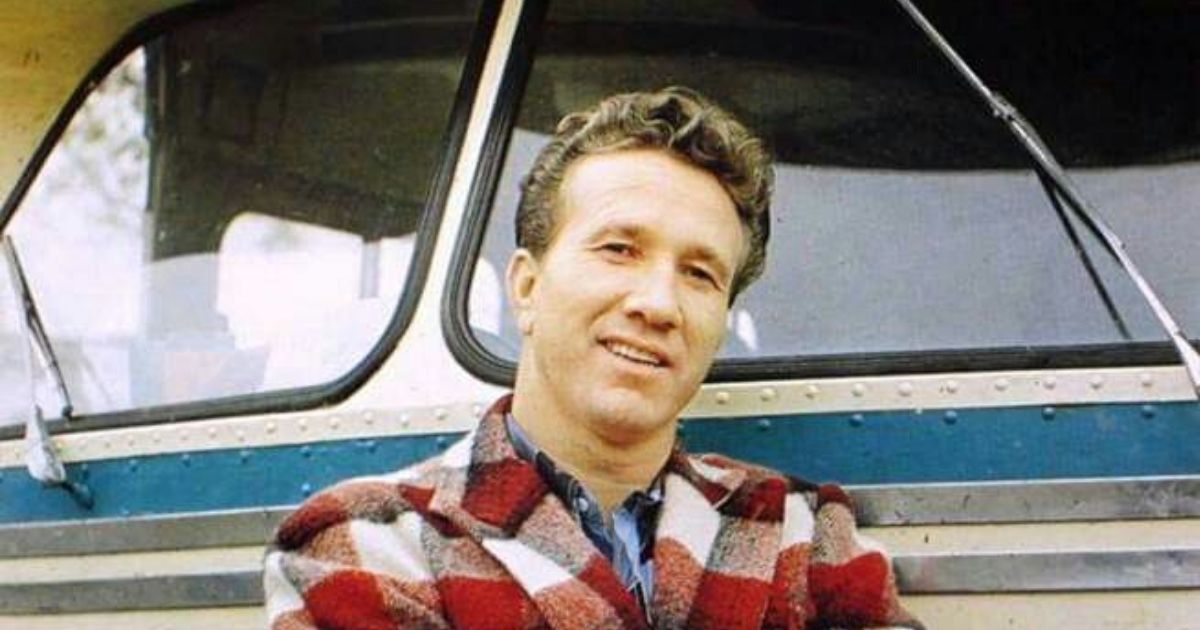
About the song
“The Hanging Tree” is one of Marty Robbins’ most haunting and cinematic songs, blending Western storytelling with deep moral symbolism. Released in 1959, the song served as the theme for the motion picture of the same name, The Hanging Tree, starring Gary Cooper and Maria Schell. Robbins’ performance, rich with emotion and dramatic tension, transformed the song into a timeless Western ballad that still resonates with fans of both country music and classic film.
Unlike many of Robbins’ more romantic or upbeat tracks, “The Hanging Tree” delves into darker, more existential themes — guilt, redemption, justice, and mortality. Through its haunting lyrics and somber melody, the song explores the story of a man condemned to die, reflecting on the choices that brought him to the edge of life and death. Its poetic depth and cinematic quality make it one of the standout pieces in Marty Robbins’ legendary career.
Background and Historical Context
By the time “The Hanging Tree” was recorded, Marty Robbins had already established himself as one of country music’s most versatile voices. Born Martin David Robinson in 1925 in Glendale, Arizona, Robbins grew up listening to cowboy songs and Mexican ballads that shaped his unique narrative style. He rose to prominence in the 1950s with hits like “Singing the Blues” and “A White Sport Coat (and a Pink Carnation)”, but it was his fascination with the Old West that set him apart from his contemporaries.
In 1959, Robbins recorded “El Paso”, his most famous Western ballad, which went on to win a Grammy Award and define his legacy. That same year, Hollywood took notice of Robbins’ cinematic voice and lyrical storytelling, leading to his involvement with the film The Hanging Tree. The movie’s producers sought a theme song that could capture its somber, moral tone — and Robbins was the perfect artist to deliver it.
“The Hanging Tree” was written by Mack David and Jerry Livingston, two respected Hollywood songwriters. However, it was Robbins’ interpretation that gave the piece its soul. His expressive vocals and intuitive phrasing brought to life the film’s themes of sin, salvation, and moral reckoning. The song was released as a single in late 1959 and reached No. 15 on the Billboard Hot Country & Western chart, while also crossing over to the pop charts — a testament to Robbins’ wide appeal.
Lyrical Meaning and Symbolism
The lyrics of “The Hanging Tree” tell the story of a man condemned for a crime — though the exact details remain ambiguous. He reflects on his fate beneath the tree where he is to be executed, and the imagery is steeped in both Western and biblical symbolism. The opening lines immediately set the tone:
“I came to town to search for gold,
And I brought with me a memory,
And I seemed to hear the night wind cry,
‘Go hang your dreams on the hanging tree.’”
These lines evoke not only a sense of foreboding but also a kind of poetic fatalism. The “hanging tree” becomes a metaphor for judgment and destiny, representing the moral consequences of human greed, ambition, and betrayal. The narrator’s search for gold — a symbol of earthly desire — leads him toward his doom, suggesting that the song is as much about spiritual reckoning as it is about literal execution.
Later verses deepen this sense of tragic inevitability, as Robbins’ voice moves between quiet reflection and rising emotion. The repeated phrase, “the hanging tree,” functions like a haunting refrain — an echo of conscience, fate, and mortality. It’s a theme that runs through many of Robbins’ Western ballads: the tension between sin and redemption, between the code of the West and the moral code of the soul.
Musical Composition and Vocal Performance
Musically, “The Hanging Tree” differs from most mainstream country songs of its era. It combines elements of Western folk, orchestral film scoring, and traditional balladry, resulting in a sweeping, atmospheric sound. The arrangement features a slow tempo, with strings and background choirs that give it an almost hymn-like quality. This orchestration was unusual for country music at the time, but it fit perfectly with the song’s cinematic purpose.
Marty Robbins’ vocal performance is the centerpiece of the track. His voice is solemn yet powerful, imbued with an emotional restraint that heightens the song’s dramatic impact. He moves seamlessly from quiet introspection to soaring crescendos, embodying the condemned man’s inner turmoil. Robbins’ delivery carries a deep sense of empathy — he doesn’t merely narrate the story; he inhabits it, turning each line into a confession.
His use of tone and phrasing reflects his mastery as a storyteller. The subtle vibrato on phrases like “the hanging tree” lingers in the air, evoking both the whisper of wind through the gallows and the lingering guilt of a man facing his end. It’s a vocal performance that demonstrates why Robbins is often regarded as one of the most expressive voices in the history of country music.
Themes: Justice, Redemption, and the Human Condition
At its core, “The Hanging Tree” is a meditation on the human struggle between sin and salvation. Like many classic Western tales, it deals with the consequences of moral failure and the hope for redemption — but Robbins’ delivery adds an element of spiritual introspection. The song’s moral universe is not black and white; instead, it recognizes the complexity of human weakness and forgiveness.
The hanging tree itself serves as a symbol of both punishment and mercy. It is the place where justice is carried out, but also where the condemned man finds clarity and repentance. In this sense, the song echoes the timeless themes of Western storytelling: that even in a lawless world, the human conscience remains a force of judgment and grace.
Cultural Impact and Legacy
While “The Hanging Tree” was originally tied to its film release, it has endured as one of Marty Robbins’ most striking and memorable songs. Its haunting melody and moral depth set it apart from typical Western ballads, influencing later artists such as Johnny Cash and Kenny Rogers, who also explored similar themes of guilt and redemption.
In Robbins’ discography, “The Hanging Tree” marks an important bridge between his early country hits and his later, more ambitious Western recordings. It demonstrated that country music could be cinematic, literary, and deeply philosophical, expanding the genre’s artistic boundaries.
Even today, the song remains a favorite among fans of classic Western music. It embodies the timeless spirit of the frontier — not just the physical landscape of the West, but the inner landscape of the human soul.
Conclusion
“The Hanging Tree” stands as one of Marty Robbins’ most evocative achievements — a haunting ballad that fuses storytelling, morality, and music into a unified work of art. With its poetic lyrics, orchestral grandeur, and Robbins’ deeply moving vocal performance, the song transcends its origins as a movie theme to become a timeless reflection on life, death, and the search for redemption.
Through “The Hanging Tree,” Robbins reminds us that every story of the West is also a story of the human heart — a struggle between guilt and grace, between the shadows of the past and the hope of salvation. It is, in every sense, a masterpiece of American musical storytelling.