
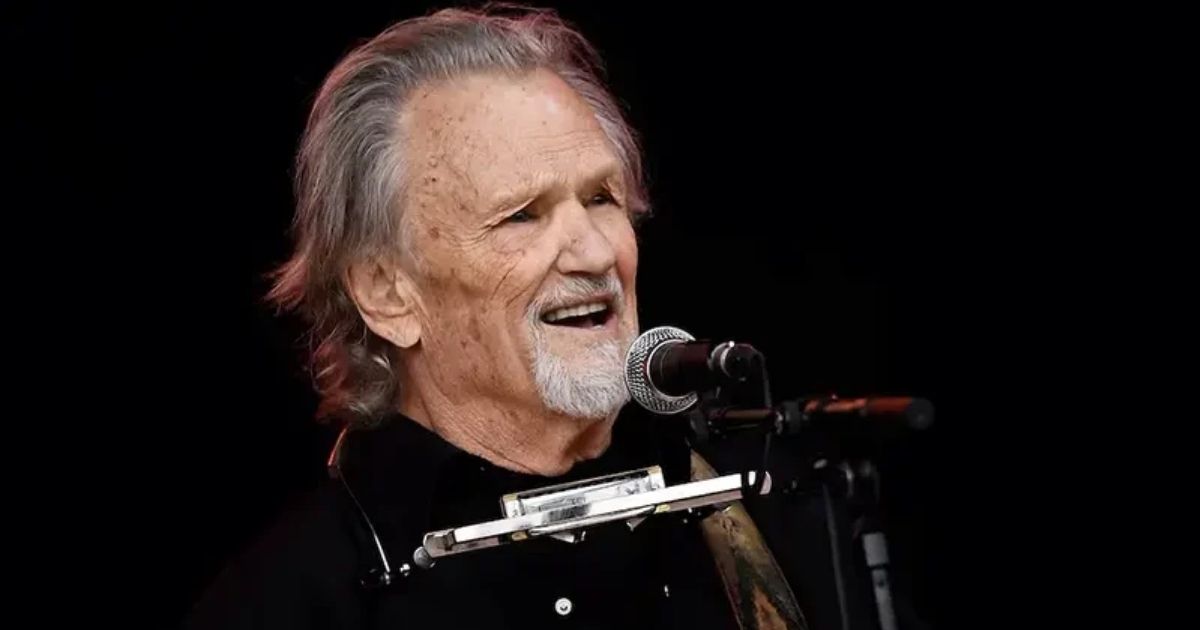
About the song
Kris Kristofferson’s “Under the Gun” stands as one of the more introspective and politically charged songs in his catalog, showcasing his signature blend of poetry, social consciousness, and gritty realism. Released in 1981 on his album To the Bone, the song reflects Kristofferson’s keen awareness of human struggle and moral ambiguity. With his raw, weathered voice and minimalist musical arrangement, Kristofferson delivers a song that explores pressure, guilt, violence, and the human condition in a world dominated by fear and control.
While many know Kristofferson for romantic ballads like “Help Me Make It Through the Night” or philosophical classics like “Why Me Lord,” “Under the Gun” belongs to the more political side of his songwriting — the part shaped by his experiences as a Rhodes Scholar, Army helicopter pilot, and outspoken critic of war and injustice. The song is part of a body of work that blurs the lines between country, folk, and protest music, proving that Kristofferson’s songwriting transcended genre and convention.
Background and Context
By the time “Under the Gun” was written, Kristofferson was already an established icon of the outlaw country movement, alongside figures like Willie Nelson, Waylon Jennings, and Johnny Cash. But unlike many of his peers, Kristofferson often used his platform to address political and moral dilemmas, drawing from his deep understanding of history, philosophy, and human psychology.
The early 1980s — when To the Bone was released — were a turbulent time in America. The Cold War loomed, global conflicts raged, and the cultural optimism of the 1960s had given way to cynicism and self-preservation. “Under the Gun” feels like Kristofferson’s reflection on that shift: a world where ideals are tested, and people are forced to act under pressure, often compromising their own humanity.
The title itself, “Under the Gun,” is a powerful metaphor. It implies being under pressure, under threat, or under scrutiny, but it also suggests a literal sense of violence — living in a world ruled by force, where survival depends on submission. Kristofferson uses this phrase as a lens through which he examines not only the individual but society as a whole.
Themes and Lyrics
At its core, “Under the Gun” is about moral compromise and the cost of living in a violent, unjust world. It paints a picture of people caught in systems they cannot control — soldiers, politicians, workers, and everyday citizens — all trying to survive “under the gun” of authority, guilt, or circumstance.
The lyrics reflect Kristofferson’s gift for combining direct storytelling with philosophical questioning. He doesn’t simply describe the external world; he delves into what it does to the human soul.
Lines such as:
“Lookin’ back it’s hard to tell, why they stood when others fell,
Or ran when others held their ground.”
suggest a meditation on courage and fear — on what makes people resist oppression or surrender to it. Every verse seems to wrestle with moral tension: the instinct to fight versus the instinct to survive.
Kristofferson’s narrator is not a preacher or a politician; he’s an observer — one who recognizes the shades of gray in every human choice. He’s aware that under enough pressure, even good people make compromises. The “gun” becomes not only a weapon of war or control, but a symbol of conscience and accountability, constantly pointed at the self.
Another key aspect of the lyrics is Kristofferson’s use of religious imagery — something that recurs throughout his writing. The song’s tone carries echoes of guilt, redemption, and fatalism, much like a confession or prayer. The man “under the gun” is trapped between his ideals and his actions, longing for peace in a world that rewards violence.
Musical Style and Atmosphere
Musically, “Under the Gun” is stripped down, allowing the lyrics and Kristofferson’s rough-edged voice to take center stage. The arrangement is classic Kristofferson minimalism: a steady rhythm, acoustic guitar, and subtle electric flourishes that underscore the song’s tension.
The production on To the Bone reflects the weariness of its themes. There’s a certain darkness to the sound — a gritty texture that mirrors Kristofferson’s worldview. By the time of this album, his voice had grown even more gravelly, almost breaking at moments, but that rawness adds emotional authenticity. He sounds like a man who’s seen too much, carrying the weight of experience in every syllable.
That musical simplicity is deliberate. Kristofferson’s style rejects gloss in favor of truth and clarity. The sparse instrumentation amplifies the song’s emotional intensity — there’s nowhere to hide, no distraction from the reality being sung.
Symbolism and Interpretation
The phrase “under the gun” can be interpreted on several levels:
Social and Political Pressure:
The song may allude to individuals under oppressive systems — soldiers following orders, citizens obeying corrupt governments, or people silenced by fear of authority.Psychological Pressure:
It also captures the internal struggles of conscience and guilt. The “gun” becomes a metaphor for one’s own moral judgment — the inner voice demanding accountability.Spiritual Pressure:
As with many Kristofferson songs, there’s a faint spiritual undercurrent — a yearning for salvation in a fallen world. The “gun” may represent divine judgment or the awareness of one’s moral failings.
Through this multi-layered metaphor, Kristofferson invites listeners to question how they behave when life puts them “under the gun.” Do they resist, conform, or collapse?
Reception and Legacy
While “Under the Gun” did not become one of Kristofferson’s major commercial hits, it remains deeply respected among his fans and critics for its literary quality and social insight. The song captures what makes Kristofferson unique: his ability to blend country storytelling with philosophical reflection and political conscience.
Over time, “Under the Gun” has gained recognition as one of Kristofferson’s underrated gems — a song that encapsulates the weary wisdom of a man who has lived through wars, fame, and personal trials. It also marked a period in his career when he was moving away from mainstream success and toward more personal, introspective songwriting.
Many later songwriters, including Steve Earle and John Prine, have cited Kristofferson’s ability to humanize political and moral issues as a major influence — and “Under the Gun” is a perfect example of that gift.
Conclusion
Kris Kristofferson’s “Under the Gun” is a song about the weight of conscience in a violent, pressurized world. It’s a meditation on the ways people cope with fear, guilt, and power — and how easy it is to lose one’s integrity when survival is on the line.
What makes the song timeless is not its politics but its humanity. Kristofferson doesn’t judge; he understands. He shows us that being “under the gun” is a universal condition — one that forces every person to confront their limits and values.
With its spare instrumentation, powerful lyricism, and moral depth, “Under the Gun” stands as a testament to Kristofferson’s artistry: his unwavering commitment to truth, empathy, and the unflinching exploration of the human soul.