
About the song
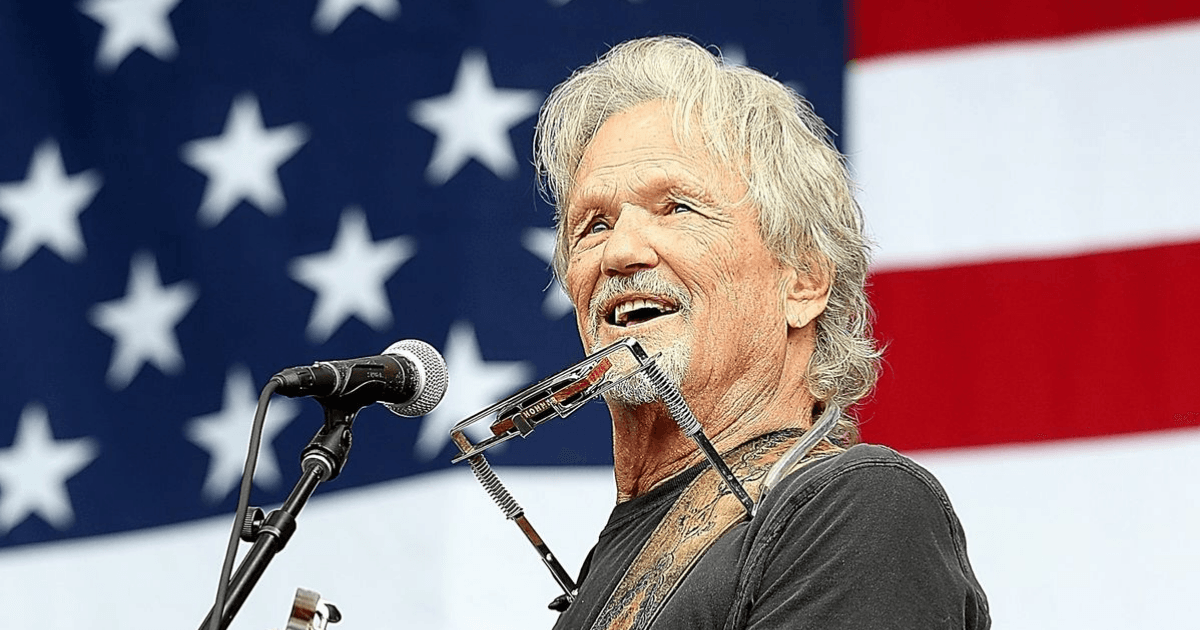
“Quinn the Eskimo (The Mighty Quinn),” as interpreted by Kris Kristofferson, is a fascinating musical moment that reveals how a song originally born from playful surrealism can transform into something warmer, earthier, and unmistakably human through the hands of a seasoned storyteller. Although the composition is widely known as a 1967 Bob Dylan creation, Kristofferson’s version—appearing on his 1986 album Repossessed—belongs firmly to the world of country-folk, shaped by his unmistakable poetic grit and the rugged spiritual tone that characterizes his mid-career work. The track stands as a reinterpretation rather than a reinvention, revealing how Kristofferson could inhabit a song, strip it down, and recast its energy through his weathered voice and lived experience.
By the mid-1980s, Kristofferson had already established himself as a giant among American songwriters—one whose lyrics often dealt with redemption, rebellion, faith, and flawed humanity. Recording “Quinn the Eskimo” during this era was not merely an act of covering a well-known folk anthem; it was an artistic choice that aligned with his ongoing interest in cultural archetypes and the way ordinary people project hope onto mythic figures. Kristofferson had a way of taking stories that were whimsical or metaphorical and grounding them in emotional truth, and his take on the song is no exception.
Musically, his version leans into country-folk and Americana, with a straightforward arrangement that lets the lyrical imagery shine without distraction. His gravelly baritone—by this point seasoned with decades of life on and off the road—adds a seriousness and texture that contrasts with the song’s playful narrative. What was once zany, enigmatic, and lighthearted becomes something sturdier in Kristofferson’s hands: a folk tale wrapped in gentle humor but carried by a voice that has known hardship. The rhythmic pulse feels relaxed, steady, almost conversational, drawing listeners in as though he’s recounting an old legend by a campfire.
Lyrically, the song describes the arrival of Quinn, a figure whose presence seems to magically bring joy and order to a disorganized world. Yet when Kristofferson sings it, Quinn no longer feels like a cartoonish hero; he becomes an emblem of the long-awaited relief we all hope for—whether emotional, spiritual, or communal. Kristofferson understood the power of symbols, and through his delivery, Quinn becomes a stand-in for the idea of salvation itself, the sort of humble, unexpected savior that appears not in grand gestures but in the simple act of showing up when people need him most.
The mid-1980s context also shapes the meaning of Kristofferson’s interpretation. This was a period marked by political tension, cultural fragmentation, and disenchantment with institutional authority. Kristofferson, long an advocate for humanitarian causes and a voice critical of systems of power, likely recognized in the song a metaphorical longing for a figure who could cut through chaos with good sense and goodwill. His version carries a hint of irony but also genuine yearning, as if Quinn represents the collective desire for clarity during uncertain times.
Instrumentally, the production of “Quinn the Eskimo” on Repossessed is tastefully restrained. Acoustic guitars form the foundation, with subtle percussive elements adding drive without overwhelming the vocals. The arrangement mirrors the ethos of the album—raw, reflective, and quietly defiant. There is no glossy sheen, no attempt to mimic the crowd-pleasing energy of earlier popular renditions. Instead, Kristofferson opts for authenticity, allowing the quirks of the song to breathe naturally within his artistic identity.
In this version, Kristofferson reminds listeners that a song can live many lives. Its essence can be reshaped by the singer who interprets it, not through elaborate musical reinvention but through tone, intention, and emotional presence. His “Quinn the Eskimo” becomes a commentary on hope, leadership, and the longing for someone—or something—to restore balance. It fits seamlessly into his broader body of work, where flawed heroes, drifters, poets, and spiritual wanderers form a mosaic of human resilience.
Ultimately, Kristofferson’s take on “Quinn the Eskimo (The Mighty Quinn)” is not just a cover; it is a quiet reclamation of a folk classic, infused with maturity, introspection, and a rooted country-folk sensibility. Released in 1986, the track stands as a testament to his ability to reinterpret familiar material and turn it into something uniquely his own—a subtle but powerful reminder that even the most whimsical stories can hold profound truths when told by the right voice.