
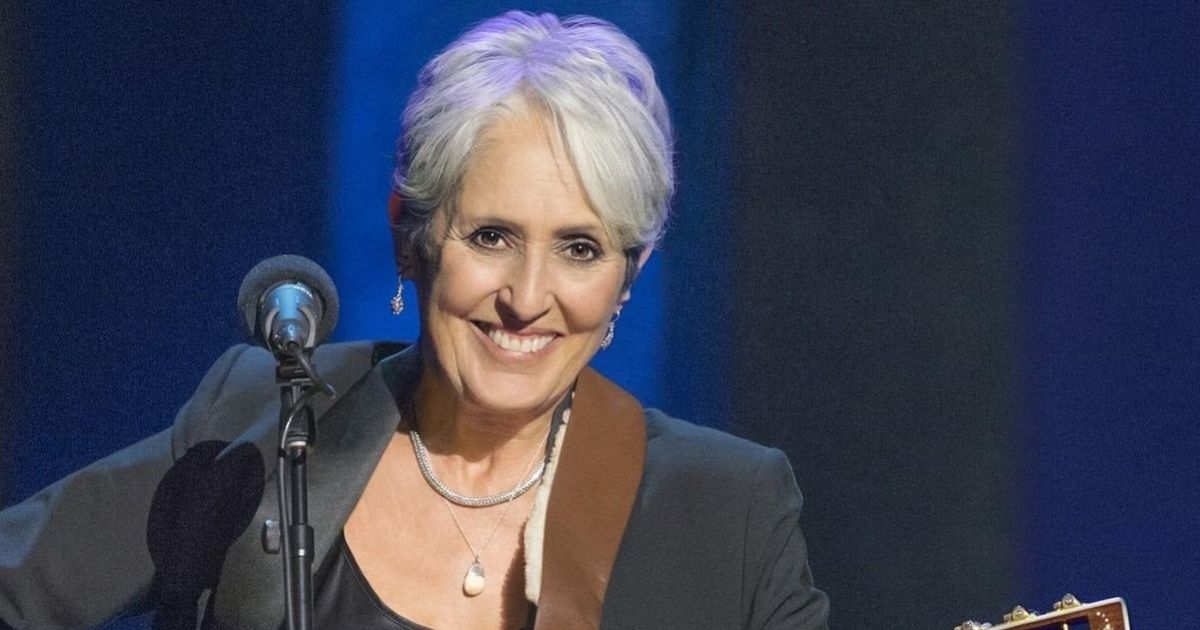
About the song
“The Night They Drove Old Dixie Down” is one of the most poignant and historically evocative songs to emerge from the late 1960s, a period of great social and political upheaval in the United States. Written by Robbie Robertson and originally recorded by The Band in 1969 for their self-titled album The Band, the song paints a vivid portrait of the American South in the final days of the Civil War. However, it was Joan Baez’s 1971 cover version that transformed the song into a commercial and cultural phenomenon, reaching a wider audience and cementing its place in American musical history.
Joan Baez, already a well-established figure in the folk music movement and a prominent voice in the civil rights and anti-war movements of the 1960s, brought her distinctive vocal clarity and emotional intensity to the song. Her version reached No. 3 on the Billboard Hot 100 chart in 1971 and became one of her most recognizable recordings. While The Band’s original performance carries a raw, earthy tone rooted in Southern Americana, Baez’s version is cleaner, more melodic, and infused with a sense of moral reflection. Through her interpretation, the song transcends its immediate historical subject and becomes a broader meditation on loss, defeat, and human dignity.
Historical and Lyrical Context
“The Night They Drove Old Dixie Down” tells the story of Virgil Caine, a fictional Confederate soldier, who narrates the collapse of the Confederate South as General Robert E. Lee’s army is overwhelmed by Union forces. The lyrics vividly capture the despair and devastation felt by Southerners at the end of the war:
“The night they drove old Dixie down, and all the bells were ringing,
The night they drove old Dixie down, and all the people were singing.”
These lines evoke both sorrow and resignation, symbolizing the fall of the Old South (“Dixie”) and the transformation of the United States into a different kind of nation. Robertson’s songwriting skillfully blends historical references with emotional storytelling, offering a human face to a complex and often painful chapter of American history.
While the song was written by a Canadian (Robertson), his empathy and storytelling craftsmanship allow him to embody the defeated Southern soldier without glorifying the Confederacy. Instead, the focus is on the universal experience of loss — the human cost of war, rather than its political ideologies.
Joan Baez’s version, however, added another layer of interpretation. Coming at a time when America was still deeply divided by the Vietnam War, her rendition resonated with listeners as an allegory for the futility of war and the grief of ordinary people caught in the tides of history. Her clear, soaring soprano gives the song a spiritual dimension, transforming Virgil Caine’s lament into something almost hymn-like.
Musical Arrangement and Performance
Musically, Baez’s cover differs significantly from The Band’s version. Where the original had a rustic, roots-rock feel with Levon Helm’s soulful Southern vocals and earthy instrumentation, Baez’s arrangement is smoother and more orchestrated. The inclusion of strings and a pronounced rhythm section gives it a folk-pop polish that made it more radio-friendly.
Her precise diction and emotional delivery highlight the song’s tragic beauty. Even though Baez famously misheard and slightly altered some of the original lyrics (for example, changing “Virgil Caine is my name” to “Virgil Cain is my name”), her performance maintains the song’s emotional integrity. The overall effect is one of timeless lament — a story that feels as relevant to modern conflicts as it does to the Civil War.
Cultural Impact and Legacy
Joan Baez’s version of “The Night They Drove Old Dixie Down” became an anthem of remembrance and reflection during an era of turmoil. It connected the struggles of the 19th century with those of the 20th, suggesting that history’s wounds continue to echo in the human heart. The song’s enduring power lies in its refusal to take sides; instead, it invites empathy for suffering itself.
Over the decades, the song has been covered by numerous artists, but Baez’s interpretation remains the most commercially successful and one of the most emotionally resonant. It demonstrated her ability to bridge folk authenticity with mainstream appeal, and to give voice to the voiceless — whether they were victims of war, injustice, or the passage of time.
In the broader scope of her career, “The Night They Drove Old Dixie Down” represents a moment when Baez successfully merged her social conscience with her artistic expression. The song endures as a reminder of how music can preserve the stories of the past while continuing to speak to the present — about grief, survival, and the resilience of the human spirit.
Conclusion
In Joan Baez’s hands, “The Night They Drove Old Dixie Down” becomes more than a tale of defeat in a distant war. It becomes a universal elegy — for the fallen, for lost causes, and for the cyclical nature of human suffering. Through her interpretation, Baez transforms a regional tragedy into a human one, and in doing so, she reaffirms the power of music to bridge time, history, and empathy.