
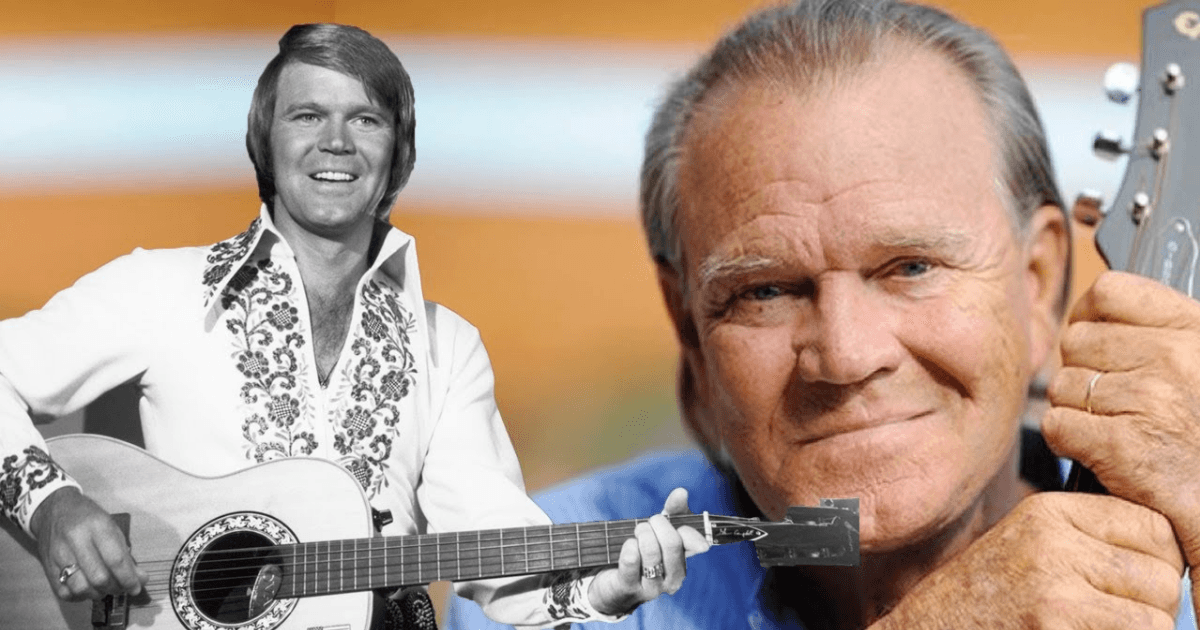
About the song
Glen Campbell’s rendition of “Amazing Grace” stands as one of the most heartfelt and spiritually resonant interpretations of the legendary hymn. Although the song itself is centuries old, Campbell recorded his most widely recognized version in 1981, during a period when he explored gospel and inspirational music more deeply. His interpretation appears on several gospel-focused releases from the early 1980s, where it quickly became one of the standout tracks. The genre of his performance lies at the crossroads of country, gospel, and Christian inspirational music, allowing it to bridge the emotional warmth of his country roots with the reverence of traditional hymnody.
What makes Glen Campbell’s interpretation exceptional is not merely his remarkable voice, but the sincerity with which he delivers each phrase. Known primarily for his smooth, radio-friendly country hits and his impressive guitar craftsmanship, Campbell brought a different kind of energy to “Amazing Grace.” Instead of showcasing vocal power or technical complexity, he leaned into vulnerability, creating a version that feels intimate—almost like a personal prayer whispered aloud.
The song’s slow, gentle arrangement complements this emotional softness. Campbell’s voice enters quietly, carried by subtle guitar strums and minimal orchestration. The simplicity of the arrangement is intentional: it mirrors the humility and gratitude at the heart of the hymn. Rather than modernizing the song or adding dramatic flourishes, Campbell honors its original spirit by preserving its reflective, meditative quality. His trademark warmth becomes a guide through the melody, making an ancient hymn feel alive and emotionally immediate.
“Amazing Grace” is, at its core, a song about redemption, forgiveness, and renewal. Campbell’s life at the time added profound layers to this message. By the early 1980s, he had weathered personal challenges, spiritual searching, and public scrutiny. His connection to the hymn seems rooted not only in performance but in lived experience. Listeners often remark that his version sounds like a man who truly understands the meaning of grace—not as an abstract idea, but as a force that had touched his own life. This depth gives the recording a quiet emotional authority.
The pacing of Campbell’s rendition is particularly striking. He doesn’t rush the verses; instead, each line unfolds slowly, allowing the listener to absorb every word. The pauses between lines feel almost like breaths between prayers. The melody becomes a slow walk through memory, regret, gratitude, and hope. By respecting the hymn’s natural emotional rhythm, Campbell makes it easy for the listener to reflect inward while hearing it.
Another significant element is the purity of his tone. Campbell had one of the clearest voices in country music—smooth, steady, and effortlessly expressive. When he sings the opening line, “Amazing grace, how sweet the sound,” there is no theatricality, only deep sincerity. His phrasing is gentle, the vibrato subtle, the articulation natural. It feels less like a performance and more like a moment of spiritual stillness captured in sound.
Instrumentally, the recording leans heavily on acoustic textures, a choice that further reinforces its authenticity. The guitar—an instrument Campbell mastered as one of the finest session musicians of his era—plays softly beneath the vocal line, giving the song a grounding presence. Light backing harmonies or string touches appear in certain versions, but these additions are never overwhelming; they simply expand the emotional space of the hymn.
Glen Campbell’s “Amazing Grace” also holds a special place in his broader discography. While many know him for hits like “Rhinestone Cowboy,” “Wichita Lineman,” or “Gentle on My Mind,” songs like “Amazing Grace” reveal a different dimension of his artistry. It shows Campbell not only as a performer, but as a man of faith, humility, and introspection. For many fans, this rendition is proof that his emotional depth matched his technical skill.
Over the years, Campbell’s version has been used in memorial services, church gatherings, and personal moments of reflection. Its enduring popularity comes from more than musical beauty; it comes from the emotional truth he brings to it. His voice makes listeners feel seen, comforted, and understood. That is the quiet power of his interpretation: it turns a familiar hymn into a personal companion.
In the end, Glen Campbell’s 1981 country-gospel version of “Amazing Grace” remains a moving testament to the enduring power of faith, redemption, and the human desire for forgiveness. With gentle grace and emotional honesty, he transforms a centuries-old hymn into a living, breathing experience—one that continues to touch hearts across generations.