
About the song
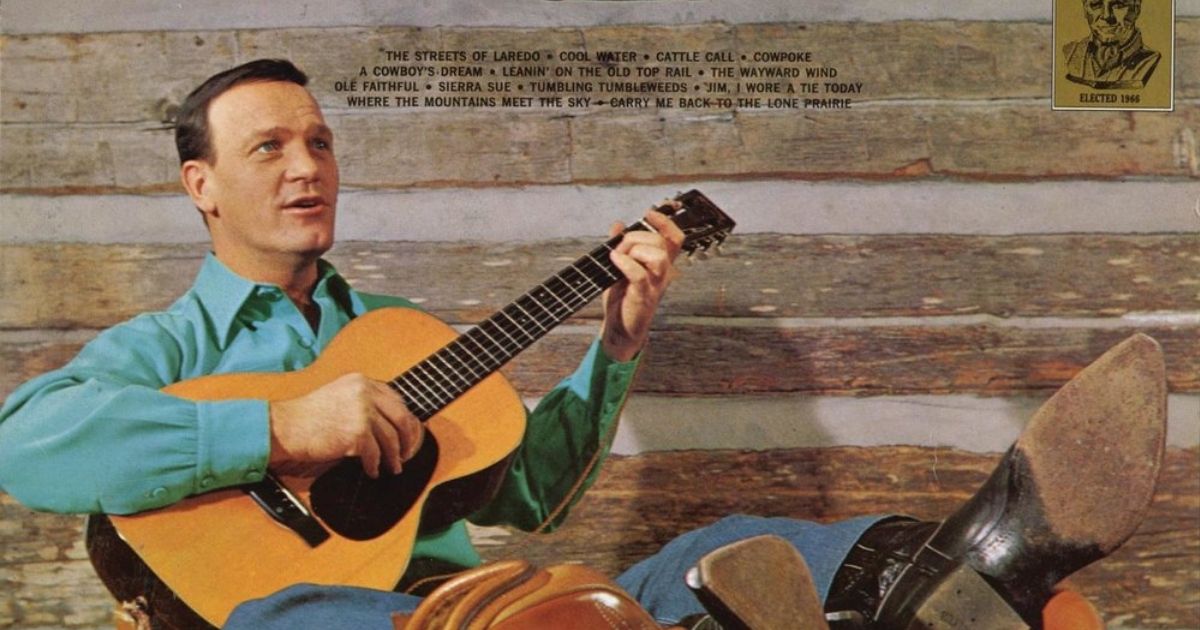
Few songs capture the soul of the American West as vividly as “Cattle Call”, performed by the legendary Eddy Arnold. Blending the nostalgic spirit of the open range with the refined artistry of mid-century country music, “Cattle Call” stands as one of the most recognizable and enduring cowboy songs of all time. Originally written and recorded by Tex Owens in the 1930s, the song found new life — and lasting fame — through Eddy Arnold’s definitive 1955 version.
Arnold’s rendition transformed a traditional Western tune into a masterpiece of country-pop craftsmanship, combining rustic authenticity with polished production. His smooth, expressive baritone and the song’s unforgettable yodeling passages made “Cattle Call” both a commercial hit and a cultural landmark. It became one of the defining songs of his career, symbolizing his ability to bridge the gap between old-time cowboy music and the modern Nashville sound.
Origins and Background
The story of “Cattle Call” begins in 1934, when cowboy singer and radio performer Tex Owens wrote the song while working as a disc jockey in Kansas City. Legend has it that Owens was inspired by the sound of cattle lowing in a nearby field. The melody came to him naturally — a lilting tune that evoked both the loneliness of the range and the beauty of the open plains. Owens recorded the song in 1936, and it quickly became a minor hit among fans of Western music.
Nearly two decades later, Eddy Arnold, already a major country star, revisited the song. By the early 1950s, Arnold had established himself as one of country music’s most popular and versatile performers, with a string of chart-topping hits and a reputation for blending traditional country with smoother pop elements. His decision to record “Cattle Call” reflected both a tribute to his rural roots and a recognition of America’s nostalgia for its Western past.
Arnold first recorded “Cattle Call” in 1944 as an early radio single, but it was his 1955 re-recording — featuring a lush orchestral arrangement and backing vocals by The Hugo Winterhalter Orchestra — that became a nationwide sensation. The song climbed to No. 1 on the Billboard Country & Western chart and became one of Arnold’s signature pieces.
Lyrical Meaning and Atmosphere
At its heart, “Cattle Call” is a simple yet evocative depiction of cowboy life. The lyrics describe a lone cowboy on the open range, calling to his cattle beneath the wide Western sky:
“Woo-hoo-hoo-hoo, woo-hoo,
The cattle are prowlin’, the coyotes are howlin’,
Way out where the doggies bawl…”
The song paints an auditory and visual picture of the American frontier — the open plains, the echoing cries of animals, and the solitude of a cowboy at work. The “call” itself is both literal (a technique cowboys used to gather cattle) and symbolic, representing a longing for freedom, peace, and connection with nature.
There is no story of heartbreak or conflict; instead, the song celebrates the tranquil rhythm of Western life, where man and landscape coexist in harmony. In an era when many country songs focused on lost love or urban change, “Cattle Call” offered listeners a return to a simpler, purer vision of America’s rural heritage.
Musical Structure and Performance
Musically, “Cattle Call” is as distinctive as it is beautiful. The song begins with Arnold’s iconic yodeling, which immediately transports listeners to the wide-open range. His voice — rich, warm, and effortlessly controlled — carries both the melancholy and serenity of the cowboy’s world. The yodeling serves not just as a musical ornament but as a storytelling device, echoing across imaginary canyons like a call to distant herds or a memory of home.
The 1955 arrangement is lush and sophisticated, combining Western instrumentation with orchestral elements that reflect the emerging Nashville Sound. Violins and background vocals give the song a cinematic quality, while the steady rhythm and gentle guitar picking preserve its rustic roots. This blend of simplicity and refinement became Arnold’s trademark — he could make a cowboy song sound elegant without losing its authenticity.
Arnold’s vocal phrasing is another key to the song’s success. He sings with clarity and emotion, yet with a restraint that allows the listener to feel the vastness of the landscape. His performance feels deeply connected to the song’s imagery — every line sounds as if it were carried on the wind across an endless prairie.
Themes and Symbolism
“Cattle Call” embodies several enduring themes of American folk and country music: solitude, freedom, nostalgia, and the connection between humans and nature. The cowboy in the song is alone, but not lonely — his world is peaceful, and his companionship comes from the land and the animals he tends.
In a deeper sense, the song expresses a kind of spiritual communion with the natural world. The call to the cattle becomes a metaphor for the human voice reaching out into vastness — seeking harmony and belonging in a wild and untamed land. This timeless imagery resonated deeply with mid-century American audiences, who saw in the cowboy a symbol of independence, integrity, and simplicity.
Cultural Impact and Legacy
Eddy Arnold’s “Cattle Call” became one of the most influential Western songs ever recorded. Its success helped bridge the gap between traditional cowboy music and modern country-pop, demonstrating that the sounds of the frontier could still captivate contemporary audiences. The song’s popularity endured for decades, inspiring numerous covers by artists including LeAnn Rimes, Slim Whitman, and Elvis Presley (who reportedly admired Arnold’s vocal control).
Arnold’s version was featured in films, television programs, and even radio Westerns, cementing its place as a cultural touchstone of the American West. Beyond its commercial impact, “Cattle Call” also reinforced the idea that cowboy songs were not relics of the past but timeless expressions of the American spirit.
Conclusion
“Cattle Call” remains one of the most beautiful and iconic songs in the history of country and Western music. Through his 1955 recording, Eddy Arnold gave new life to Tex Owens’ humble cowboy ballad, turning it into a polished yet heartfelt masterpiece that captured the imagination of generations.
With its haunting yodels, vivid imagery, and serene sense of place, “Cattle Call” is more than a song — it’s a musical painting of the American frontier, full of open skies, rustling cattle, and the quiet dignity of a cowboy at work. In Arnold’s hands, the song became both a celebration of the past and a bridge to the future, preserving the cowboy spirit in the golden tones of country music’s most elegant voice.