
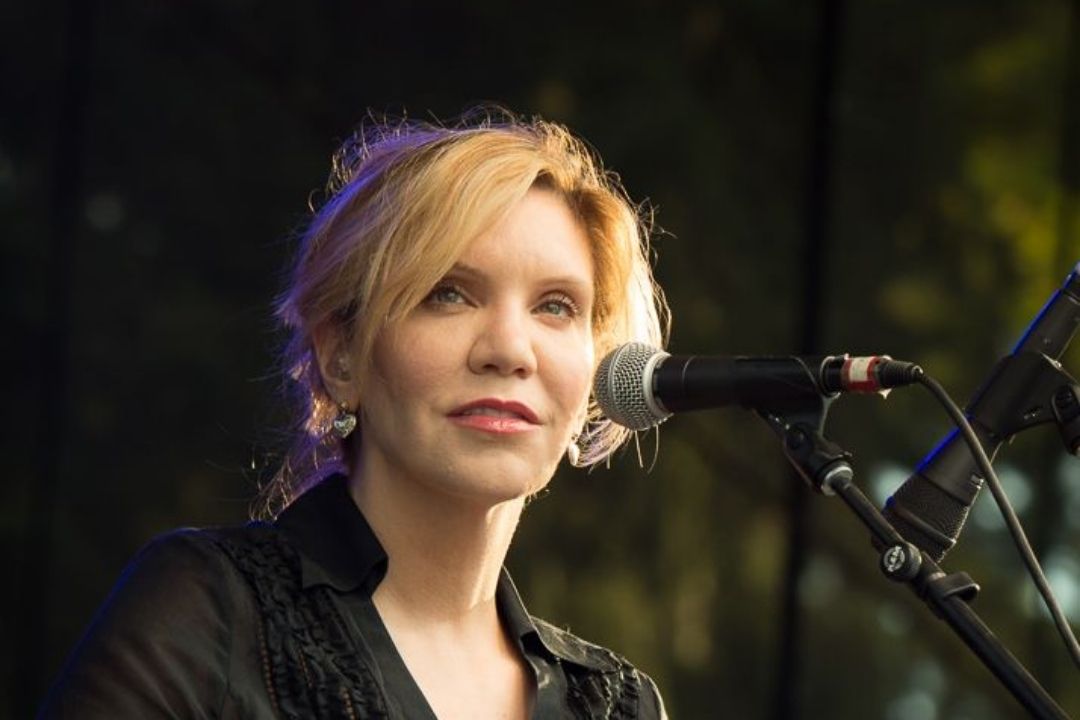
About the song
Alison Krauss – “When You Say Nothing At All”
A timeless ballad of unspoken love and emotional connection
“When You Say Nothing At All” is one of the most beloved love songs in the history of modern country and bluegrass music. While the song was originally recorded by Keith Whitley in 1988, it was Alison Krauss’s 1995 cover that brought it renewed life and a new emotional texture. Her delicate and angelic voice, paired with a simple acoustic arrangement, turned the song into an enduring classic that transcended genre boundaries and touched audiences worldwide.
Background and Origins
Written by Paul Overstreet and Don Schlitz, two of Nashville’s most prolific and respected songwriters, “When You Say Nothing At All” explores the idea that true love often transcends words. The song’s message is built around the notion that the most powerful expressions of affection don’t necessarily come through speech, but through gestures, looks, and emotional presence.
The song first gained fame through Keith Whitley, whose heartfelt version topped the Billboard Hot Country Singles chart in 1988. Tragically, Whitley passed away the following year, which further solidified the emotional weight of his rendition. Yet, it was Alison Krauss’s version, featured on the 1994 tribute album Keith Whitley: A Tribute Album, that introduced the song to a new generation and gave it a second life.
Alison Krauss’s Interpretation
Alison Krauss’s cover of “When You Say Nothing At All” was never originally intended to be a commercial single. Her version, recorded with her band Union Station, was released to country radio almost by accident—but the response was overwhelming. It became one of her most recognized and acclaimed recordings, reaching number 3 on the Billboard Hot Country Singles & Tracks chart and helping solidify Krauss’s place as one of the most gifted vocalists of her generation.
What sets Krauss’s version apart is its gentle intimacy and emotional clarity. Her voice, with its clear, ethereal tone, brings a quiet sincerity to the lyrics. Unlike other singers who might belt the chorus with full force, Krauss takes a restrained approach. The result is a tender, almost whispered performance that feels incredibly personal—like a private confession of love. Her delivery is emotionally nuanced, capturing both vulnerability and confidence.
The arrangement is simple and elegant, relying on acoustic guitar, soft mandolin, and sparse harmonies. This minimalism enhances the message of the song: love doesn’t need grand gestures—it just needs presence and authenticity.
Themes and Lyrics: Love Beyond Words
The lyrics of “When You Say Nothing At All” emphasize the unspoken aspects of love:
“It’s amazing how you can speak right to my heart
Without saying a word, you can light up the dark”
These opening lines set the tone for the rest of the song. It’s about emotional intuition, about understanding someone so deeply that words are no longer necessary. The chorus reinforces this idea:
“The smile on your face lets me know that you need me,
There’s a truth in your eyes saying you’ll never leave me…”
The simplicity of the lyrics is part of their power. They articulate a universal feeling—how often the most meaningful emotional moments in relationships are experienced in silence. Whether it’s a glance, a smile, or a simple shared moment, this song beautifully portrays how love communicates in subtle, profound ways.
Impact and Legacy
Alison Krauss’s rendition of “When You Say Nothing At All” won the 1995 CMA Award for Single of the Year, a significant milestone that reflected both critical acclaim and popular success. The song also helped expose a wider audience to Krauss’s unique blend of bluegrass, country, and folk music, expanding her fanbase beyond traditional genre lines.
The enduring popularity of Krauss’s version has made it a staple at weddings, romantic events, and even film soundtracks. Although Ronan Keating’s 1999 cover for the Notting Hill movie soundtrack also gained global popularity, particularly in Europe, Krauss’s version remains the emotional benchmark for many fans.
Cultural Resonance
“When You Say Nothing At All” resonates because it speaks to a fundamental human experience—the idea that love, in its purest form, often goes beyond language. In an era where communication is increasingly fast and digital, the song reminds listeners of the value of quiet, sincere emotional connection. It also highlights the unique power of Alison Krauss’s artistry, showing how subtlety and grace can be more powerful than bombast and spectacle.
Conclusion
Alison Krauss’s “When You Say Nothing At All” is more than a cover—it’s a reinvention that brought new emotional depth to an already beautiful song. With her distinctive voice, minimalist arrangement, and heartfelt delivery, Krauss created a version that feels timeless. It continues to move listeners decades after its release and stands as a testament to the enduring power of music to express what words sometimes cannot.